
God Didn't Create You to Do Life Alone: Why Real Relationships Still Matter in an AI World
July 14, 2026
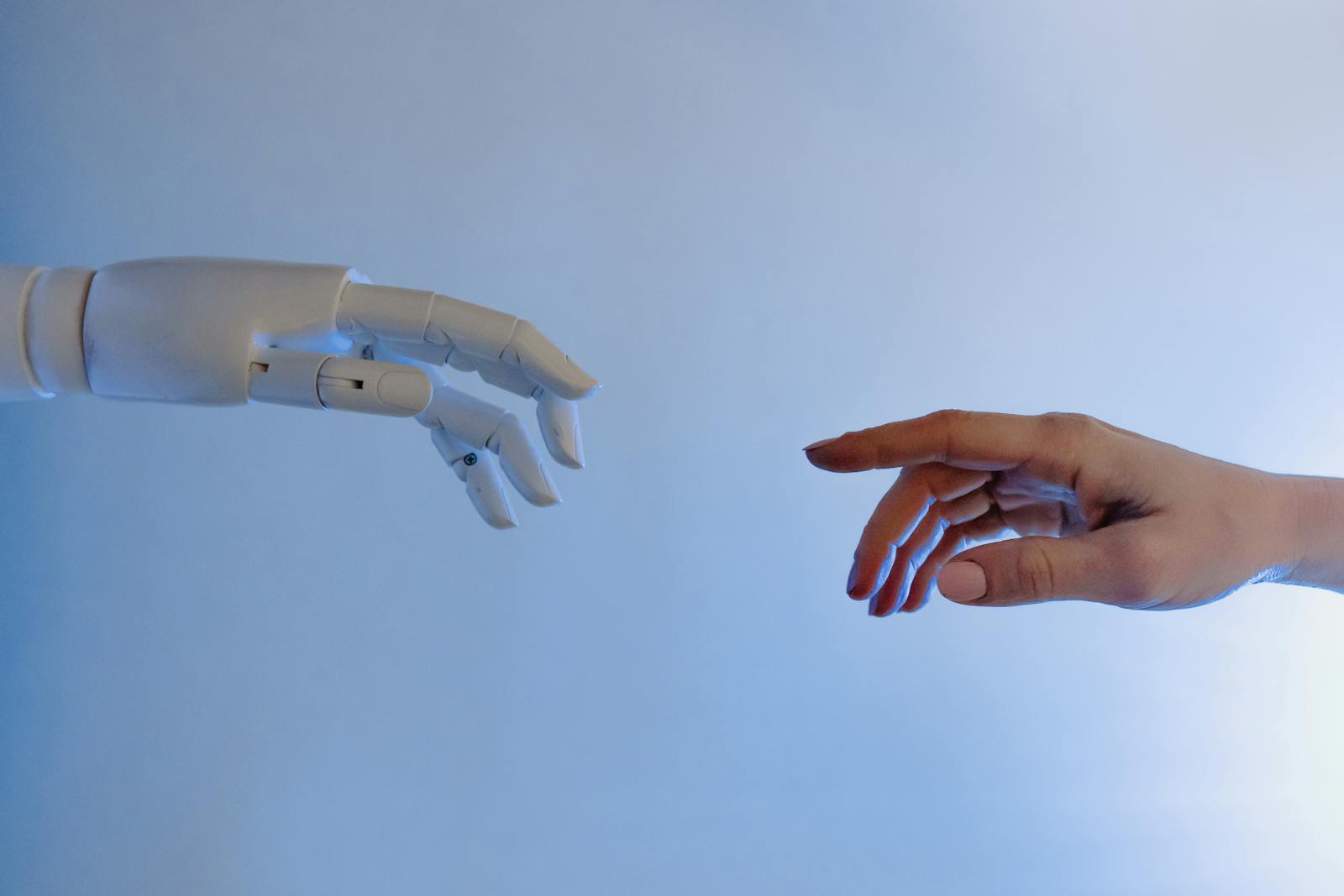
“Two are better than one… If either of them falls down, one can help the other up.” — Ecclesiastes 4:9–10
Have you ever had one of those nights when you wanted someone to talk to—but instead of texting a friend, you opened an AI chatbot?
Maybe it felt easier.
No fear of being judged. No waiting for a reply. No awkward conversations.
Artificial intelligence is becoming part of everyday life. It can help us study, organize our schedules, answer questions, and even encourage us when we're having a difficult day. Used wisely, it can be a valuable tool; however, when it begins to replace human relationships, it may interfere with emotional growth, our ability to resolve conflicts, and healthy social development.
We Were Created for Relationships
From the very beginning of Scripture, God declared that something wasn't good.
“It is not good for the man to be alone.” — Genesis 2:18
Before there was sin…
Before there was brokenness…
There was relationship.
God created us for connection—with Him and with one another.
Throughout the Bible, we see this pattern:
- Jesus surrounded Himself with close friends.
- The early church met together daily.
- Believers were instructed to encourage, forgive, comfort, serve, and carry one another's burdens.
None of those commands can happen in isolation.
God never intended faith to be lived alone.
The Rise of AI Companions
Many teenagers and young adults are now turning to AI companions for emotional support, relationship advice, and even friendship. Recent research suggests that while AI can provide immediate, nonjudgmental responses, it also carries significant risks if it begins replacing real human relationships.
Researchers warn about two major concerns:
1. Replacing real relationships
Instead of talking through conflicts with friends or family, some young people ask AI for advice. Instead of reaching out to classmates, they rely on AI for schoolwork. These choices may seem small, but over time, they reduce opportunities to practice communication, empathy, conflict resolution, and emotional maturity.
2. Developing unrealistic expectations
AI responds almost instantly. It rarely disagrees with you; it doesn't get tired and does not misunderstand your tone. Real people do.
Healthy friendships require patience, forgiveness, compromise, humility, and grace—qualities we only develop through real-life relationships. Researchers caution that AI companions may unintentionally teach young people to expect relationships without disagreement or sacrifice.
Why Human Relationships Matter
Every difficult conversation teaches us something.
Every disagreement teaches us patience.
Every apology teaches us humility.
Every act of forgiveness shapes our character.
These are the “building blocks” of emotional maturity that researchers say are especially important during adolescence and young adulthood. Avoiding these experiences may limit emotional growth.
The Bible has been teaching this all along.
Proverbs 27:17
“As iron sharpens iron, so one person sharpens another.”
Iron doesn't become sharper by avoiding friction.
Neither do we.
Jesus Modeled Real Community
Jesus often withdrew to pray alone—but He never lived life alone.
He laughed with friends, ate meals with people, comforted the hurting, corrected those He loved, and allowed others to support Him.
Even in His darkest hour in Gethsemane, He asked His closest friends to stay with Him (Matthew 26:36–38).
If the Son of God valued human relationships, we shouldn't believe we can thrive without them.
Signs You May Be Replacing Connection
Ask yourself honestly:
- Do I share more personal thoughts with AI than with trusted people?
- Am I avoiding difficult conversations because AI feels easier?
- Have I stopped reaching out to friends because chatting with AI is more comfortable?
- Do I feel more emotionally connected to technology than to people around me?
- Do I feel more emotionally connected to technology than to people around me?
- Is my screen replacing time with family, church, or friends?
These questions aren't meant to produce guilt. They're meant to help you notice whether a helpful tool is slowly becoming an unhealthy substitute.
Practical Ways to Build Real Human Connections
1. Put God First
A healthy relationship with God strengthens every other relationship (John 15:5).
2. Be Present
When you're with people, put your phone away. Presence is one of the greatest gifts you can give someone (James 1:19).
3. Join Christian Community
Become involved in a youth group, Bible study, campus ministry, or church small group. Faith grows stronger in community (Hebrews 10:24–25).
4. Prioritize Face-to-Face Conversations
Instead of texting everything, spend time with people in person. Conversation is a skill that improves with practice.
5. Don't Run from Conflict
Healthy friendships aren't conflict-free. Learn to apologize and forgive. These moments build maturity (Ephesians 4:2–3).
Ephesians 4:2–3 reminds us to be humble, gentle, patient, and bear with one another in love.
6. Use AI as a Tool—Not a Replacement
AI can help you brainstorm ideas, study the Bible, organize your schedule, or practice interview questions. But let it point you toward people—not replace them.
When you're struggling emotionally, talk with a trusted parent, youth leader, pastor, counselor, mentor, or mature Christian friend.
Remember This
No human relationship can completely satisfy the deepest longing of your heart.
That place belongs to Christ alone. Yet God often chooses to love, encourage, strengthen, and heal us through other people. Real relationships may require vulnerability. They may involve disappointment and even include conflict.
But they're still one of God's greatest gifts
Reflection
This week, challenge yourself to strengthen one real relationship.
- Call someone instead of texting.
- Invite a friend to grab coffee.
- Join a Bible study.
- Tell someone how much they mean to you.
- Pray with another believer.
Every small step toward genuine connection is a step toward God's design for your life.
Because technology can be useful… People are irreplaceable.